Case study — DM Taxi Assistant
Built for one operator.
Now sold to many.
The full story of our flagship build: what it is, where it came from, and the AI-run pipeline that keeps shipping it forward.
What is DM Taxi Assistant?
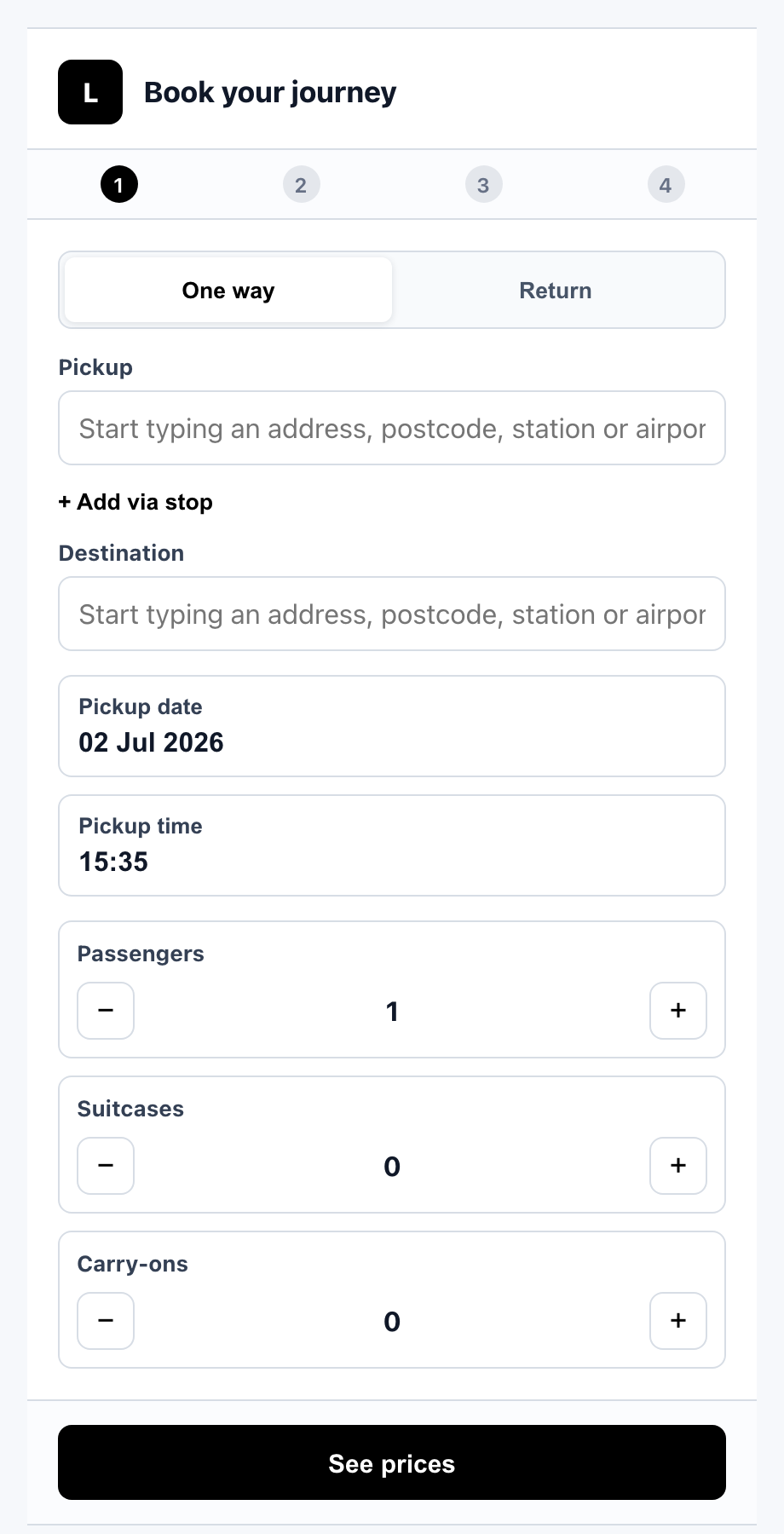
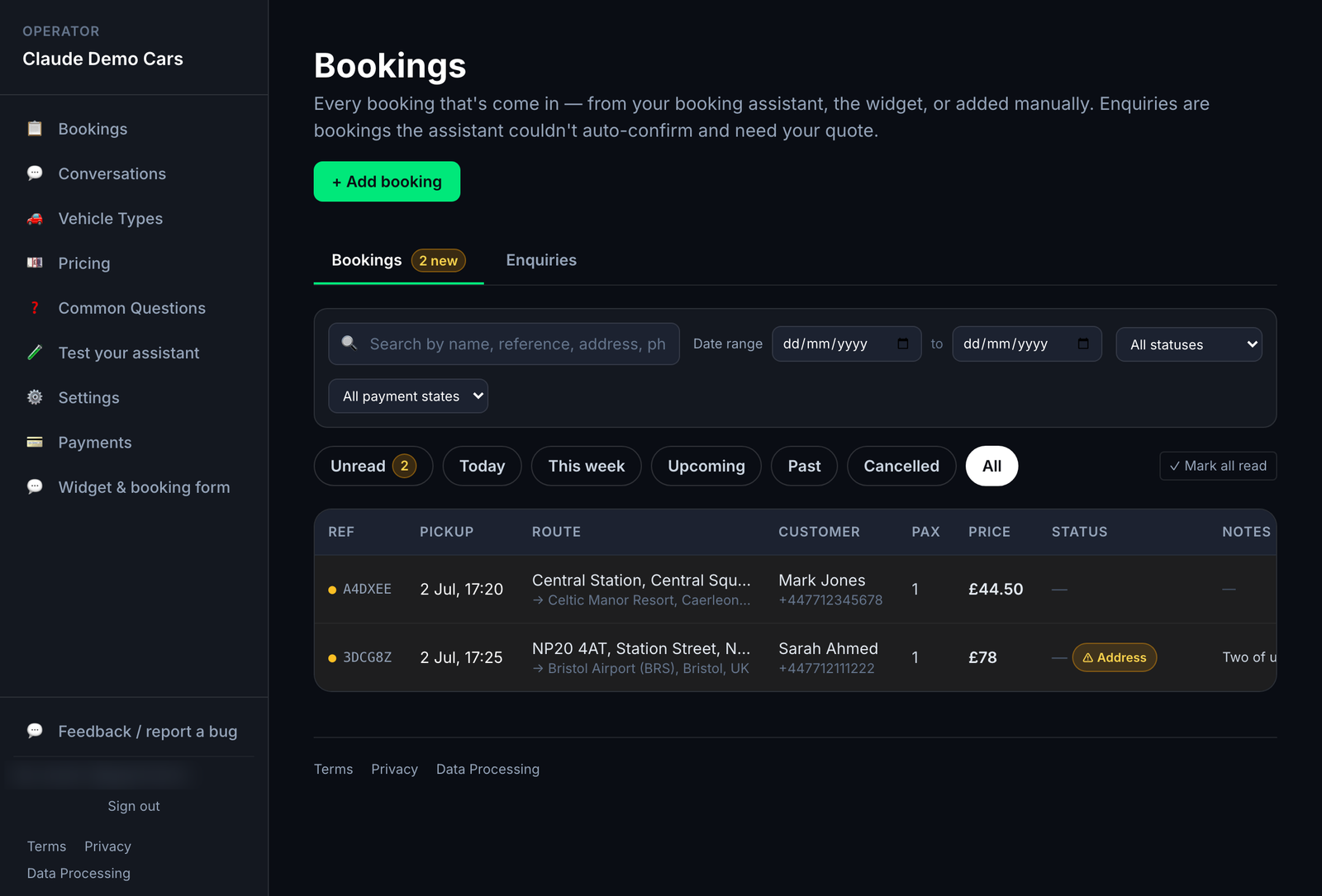
DM Taxi Assistant is an AI booking platform for taxi and private hire operators. One AI brain sits across the operator's website chat, WhatsApp and social channels. It answers like a good dispatcher: quotes the fare, books the job, takes card payment through Stripe, and hands the confirmed booking to the operator's dispatch. It works around the clock, never leaves a message unanswered, and passes anything unusual to a human.
How it was born
It started as a build for one client — Matthew McElhinney's taxi firm. Matty needed the constant messages and booking enquiries covered without hiring more office staff, so we built him an assistant wired into the way his business already ran. It worked well enough that the obvious question followed: why should only one operator have this?
We productised the build, and now sell it to other operators. That's our model in one story — a real problem for a real business first, a product second.
“From the way I interact with customers and manage bookings, to my marketing and SEO, I can now do a week's worth of work in a day.”
— Matthew McElhinney, taxi operator
What it looks like
How it keeps getting better — the deep dive
The part most people don't believe until they see it: the product largely builds itself, under human control. Whenever a feature request or a bug is reported, the system summarises it, pings us on WhatsApp for build approval, then builds it.
In detail — when an operator reports a bug or asks for a feature inside the app:
- iSummarise. AI reads the report and turns it into a clear, testable description of what's wanted.
- iiApprove. We get pinged on WhatsApp and make the human call: build, refine scope, or decline.
- iiiSpec. If it's a build: one AI agent writes the specification.
- ivCode. A second agent writes the code.
- vReview. A third agent reviews the work line by line.
- viTest. A fourth agent tests it against real cases.
That's why one small team ships at the pace of a big one — and why Matty gets improvements in days, not quarters.
And Olly?
Same story, different trade. Olly is a collection of features we built for tradesmen — a WhatsApp voice note becomes a branded PDF quote or invoice, synced to Xero or QuickBooks — which we decided to package and sell. It's live in production today.